
Category: Blogs

  • Personal Insurance in 2025: Guide to Final Expense and Burial Insurance

    Personal Insurance in 2025: Guide to Final Expense and Burial Insurance

    Personal insurance, often called burial insurance or final expense insurance, is a small whole life insurance policy designed to cover end-of-life costs, including funeral expenses, medical bills, and outstanding debts. This type of coverage provides peace of mind to aging individuals, ensuring their loved ones are not left with unexpected financial burdens.

    In 2025 top insurance providers such as Mutual of Omaha, Gerber Life, AIG, and Transamerica continue to offer personal insurance with flexible policies and competitive rates. Unlike traditional life insurance, personal insurance (also known as final expense insurance) is easier to qualify for, making it an attractive option for seniors with health conditions.

    Why Personal Insurance (Burial Insurance) Matters to Aging Consumers

    As funeral costs continue to rise, many aging individuals turn to personal insurance, burial insurance or final expense insurance as a financial safety net. Here’s why it’s valuable.

    • Funeral costs covered—The average funeral costs over $8,300, not including medical and legal expenses
    • No medical exam required—Most policies offer guaranteed acceptance for seniors up to age 85
    • Premiums fixed for life—Premiums never increase, ensuring affordability
    • Quick payouts provided—Benefits are typically paid within a few days, allowing families to cover expenses promptly
    • Loved ones protected from financial strain—Ensures that surviving family members are not burdened with sudden expenses

    Best Personal Insurance Providers in 2025

    Several well-known insurance providers offer personal insurance plans, also referred to as burial insurance or final expense insurance, with varying coverage options. Here are some of the top-rated companies:

    Mutual of Omaha – Best for No Waiting Period

    If you’re looking for a trusted provider with no waiting period for coverage, Mutual of Omaha offers competitive burial and personal insurance plans to meet your needs.

    • Coverage: $2,000-40,000
    • Ages: 45-85
    • Pros: No waiting period, competitive pricing, fast claim payouts
    • Cons: Limited to whole life policies only

    Gerber Life Insurance – Best for Financial Stability

    For seniors seeking financial stability and guaranteed acceptance, Gerber Life Insurance is a well-known name in final expense and personal insurance.

    • Coverage: $5,000-25,000
    • Ages: 50-80
    • Pros: Guaranteed acceptance, no medical exam
    • Cons: Two-year waiting period for full benefits

    American International Group (AIG) – Best for Guaranteed Issue

    If health concerns are a barrier, AIG’s guaranteed issue policies provide a hassle-free option with no medical exam required.

    • Coverage: $5,000-25,000
    • Ages: 50-85
    • Pros: No medical exam, lifetime coverage
    • Cons: Two-year waiting period before full payout

    Transamerica – Best for Higher Coverage Limits

    For those needing higher coverage options to protect their families, Transamerica offers flexible personal insurance plans with limits up to $50,000.

    • Coverage: $1,000-50,000
    • Ages: 45-85
    • Pros: Large coverage options, fast approval
    • Cons: Some policies require health screening

    Other providers such as Aetna, Royal Neighbors, and Liberty Bankers Life also offer competitive personal insurance policies.

    Key Benefits of Personal Insurance in 2025

    Personal insurance, also known as final expense insurance or burial insurance, offers the following key benefits:

    • Simplified issue policies— Although simplified issue policies don’t require a medical exam, applicants must answer health questions as part of the application process. These policies generally have lower premiums compared to guaranteed issue policies, making them a cost-effective option for those who can meet basic health requirements.
    • Guaranteed issue policies—Available to everyone, without medical exams or health questions being required, guaranteed issue policies ensure 100% acceptance. However, these policies often have higher premiums and include a two-year waiting period before the full death benefit applies.
    • Preneed funeral plans—Arranged directly through a funeral home, preneed funeral plans allow individuals to select and pay for services in advance. While this locks in today’s prices, it lacks the flexibility of personal insurance policies that allow beneficiaries to use funds as needed.

    Most seniors opt for simplified or guaranteed issue personal insurance in order to secure coverage quickly and avoid financial stress for their families.

    Consumer Recommendations for Q1 2025

    If you’re considering personal insurance, here are some tips to make the best choice:

    • Compare multiple quotes—Rates vary by provider so get at least three quotes
    • Check for waiting periods—Policies with no waiting period provide full benefits immediately
    • Verify financial strength—Look for companies rated A or higher by AM Best for financial stability
    • Ensure premiums are fixed—Avoid policies that increase premiums over time
    • Work with a licensed agent—Local agents can help you find the best coverage for your state

    To find a licensed agent near you, visit Medicare.gov or your state’s insurance department website. By securing personal insurance now, you ensure peace of mind for yourself and financial security for your loved ones.

    Sources:

    Further Thoughts

    Personal insurance, alternately referred to as burial insurance or final expense insurance, remains a reliable and affordable option for seniors looking to cover end-of-life expenses in 2025. With trusted providers like Mutual of Omaha, Gerber Life, AIG, and Transamerica, consumers can secure coverage that fits their needs and budget. By comparing options and consulting with a licensed agent, you can ensure that your loved ones are financially protected when the time comes.

    For more insights and innovative solutions in digital marketing, visit Innovation Direct Group.

    #customerexperience #digitalmarketing #innovationdirectgroup

  • The Power of Communication Skills in Marketing and Advertising

    The Power of Communication Skills in Marketing and Advertising

    Effective communication skills are at the heart of successful marketing and advertising. These skills not only enhance the ability of companies to convey their messages but also play a crucial role in creating value for consumers.

    Role of Communication Skills

    In marketing and advertising, communication represents the ability to clearly and persuasively convey messages through various channels including digital media, print, and face-to-face interactions.

    Key components of communication skills include:

    • Clarity—Ensuring that messages are easily understood by target audiences
    • Persuasion—Crafting messages that influence consumer behavior and drive action
    • Engagement—Creating content that captures and maintains audiences’ interest
    • Adaptability—Tailoring messages to different platforms and audience segments

    Value to Organizations

    Regardless of their size, industry, or niche, organization benefit when their employees and contractors demonstration high-quality communication skills in marketing and advertising:

    • Brand building—Effective communication helps in establishing a strong brand identity and voice. Consistent and clear messaging across all platforms builds brand recognition and loyalty.
    • Customer relationships—Good communication fosters positive relationships with customers. It helps in understanding customer needs, addressing their concerns, and providing relevant information, leading to enhanced customer satisfaction and retention.
    • Competitive advantage—Companies that excel in communication can differentiate themselves in a crowded market. Clear and persuasive messaging can make a brand stand out and attract more customers.
    • Increased sales—Persuasive communication techniques can drive conversions. Well-crafted advertising campaigns with strong calls to action can lead to increased sales and revenue.

    Value to Consumers

    Clients and customers also benefit when their needs and desires are addressed with high-quality communication skills in marketing and advertising:

    • Informed decision-making—Clear and honest communication helps consumers make informed decisions about the products and services they choose. This builds trust and confidence in the brand.
    • Enhanced experience—Engaging and personalized communication enhances the overall consumer experience. It makes interactions with brands more enjoyable and meaningful.
    • Problem resolution—Effective communication ensures that consumer issues and concerns are promptly addressed. This leads to higher satisfaction and loyalty.

    Recent Relevant Statistics

    According to Edelman’s 2023 Trust Barometer, 58% of consumers say that they trust brands that communicate transparently and honestly (source: Edelman). Content that tells a compelling story increases engagement rates by 22% compared to generic content (source: HubSpot).

    65% of consumers say that they’ll stay loyal to brands that offer more personalized experiences. 84% of customers say being treated like a person, not a number, is very important to winning their business (source: Salesforce).

    Brands with strong omnichannel customer engagement strategies retain on average 89% of their customers in comparison to 33% for companies with weak strategies (source: Digital Marketing Institute). 60% of consumers engage with marketing due to their familiarity with and liking of the brand while only 37% said that they engaged because they needed what was being advertised (source: Epsilon).

    Further Thoughts

    Communication skills in marketing and advertising are invaluable assets for companies aiming to build strong brands, foster customer relationships, and drive sales. For consumers, these skills translate into better decision-making, enhanced experiences, and greater satisfaction.

    By understanding and leveraging effective communication strategies, companies can create meaningful connections with their audiences and achieve sustained success in the competitive marketplace.

    For more insights and innovative solutions in marketing and advertising, visit Innovation Direct Group.

    #customerexperience #marketing #advertising #innovationdirectgroup

  • “Reply-All” Disasters: Office Gossip, Passive-Aggressive Coworkers, and Embarrassing Personal Details

    “Reply-All” Disasters: Office Gossip, Passive-Aggressive Coworkers, and Embarrassing Personal Details

    In today’s workplace, few things strike fear into the hearts of office workers like the dreaded “reply-all” button. One click, and your carefully crafted (or hastily written) email can turn into an office-wide spectacle, showcasing your gossip, grudges, or gaffes for everyone to see.

    Hilarious Office Gossip Gone Public

    Imagine this: Maria from accounting just sent out a company-wide memo about the new expense reporting system. In the flurry of responses, you accidentally hit reply-all with a juicy tidbit meant only for your work bestie, Lisa.

    Example: “Can you believe Gary from sales got caught napping in his car again? #naptimeGary”

    Suddenly, Gary’s napping habits are the talk of the office. Instead of flying under the radar, poor Gary is now the subject of memes and light-hearted office jokes.

    Passive-Aggressive Coworker Chronicles

    Passive-aggressive behavior is a staple in many workplaces, but when it spills into the reply-all realm, things get interesting. Sarah from marketing might have a bone to pick with Bob in IT, and she decides to use the office-wide email as her battleground.

    Example: “Thanks, Bob, for fixing the printer again. Maybe next time we can just get a new one instead of trying to revive this relic?”

    What was meant to be a subtle jab is now a topic of water cooler conversation as everyone debates whether Sarah and Bob need a conflict resolution seminar.

    Embarrassing Personal Details Exposed

    We all have our moments, but when they’re broadcasted to the entire company, the embarrassment factor skyrockets. Jim from HR might have shared a little too much in his reply-all.

    Example: “Hey, everyone! I’m out of the office today because I have a dentist appointment to finally get that root canal done. Wish me luck!”

    While Jim was probably just trying to explain his absence, now everyone knows a bit too much about his dental hygiene.

    Current Statistics on Email Mishaps

    It’s no wonder that people occasionally make mistakes when you consider that people spend 28% of their work weeks dealing with emails (source: McKinsey® & Company).

    Indeed, 93% of people surveyed admitted that they’d made email blunders, and 3 out of 5 felt embarrassed by a work email they’d sent (source: Grammarly).

    In another study, 58% said that they’ve sent email to the wrong person (source: Tessian).

    According to a Babbel survey, 88% say that they’ve regretted the contents and language of an email immediately after sending it, with 28% confessing that an email has hurt their careers (source: CNBC).

    How to Avoid Becoming a “Reply-All” Victim

    Take a moment to ensure you’re replying to the intended recipient. It only takes a few seconds to save yourself from potential embarrassment.

    If you need to send an email to a large group, consider using BCC to prevent reply-all mishaps.

    If you’re writing something sensitive or potentially embarrassing, take a deep breath and review before hitting send.

    For gossip or personal matters, it’s always best to create a new, separate email thread rather than replying to an existing one.

    Last but not least, if you do fall victim to a reply-all disaster, a quick, humorous follow-up can help defuse the situation and show that you can laugh at yourself.

    Further Thoughts

    Next time you’re about to hit reply-all, remember these tales of woe and humor. With a bit of caution, you may navigate the digital office jungle unscathed. Fingers crossed!

    For more insights and innovative solutions in digital marketing, visit Innovation Direct Group.

    #digitalmarketing #innovationdirectgroup

  • CMS and Latest Rulings

    CMS and Latest Rulings

    The Centers for Medicare & Medicaid Services (CMS) is a federal agency within the U. S. Department of Health and Human Services (HHS). CMS plays a crucial role in the nation’s healthcare system, administering Medicare, Medicaid, the Children’s Health Insurance Program (CHIP), and the Health Insurance Marketplace. The agency’s primary mission is to ensure that millions of Americans have access to high-quality, affordable healthcare.

    Overview of CMS

    Established in 1965, CMS was part of the Social Security Act when Medicare and Medicaid were created. Since then, CMS has expanded its role to oversee various healthcare programs and initiatives.

    CMS’s responsibilities include:

    • Administering Medicare—CMS manages Medicare, which provides health insurance to people aged 65 and older, certain younger individuals with disabilities, and people with End-Stage Renal Disease (ESRD).
    • Administering Medicaid—CMS oversees Medicaid, a joint federal and state program that helps with medical costs for some people with limited income and resources.
    • Regulating health insurance—CMS enforces regulations to ensure health insurance coverage is fair and equitable. This includes overseeing the Health Insurance Marketplace, where individuals can purchase health insurance plans.
    • Improving healthcare quality—CMS implements quality improvement programs and initiatives to enhance healthcare delivery and patient outcomes across the nation.
    • Innovating in healthcare—Through the Center for Medicare & Medicaid Innovation (CMMI), CMS tests new payment and service delivery models to reduce costs and improve care.

    Latest CMS Rulings

    CMS regularly issues rulings and guidelines that impact healthcare providers, insurers, and beneficiaries. Here are some of the latest rulings:

    • System changes to prevent unauthorized Marketplace activity—Effective July 19, 2024, CMS has introduced system changes to prevent unauthorized agents and brokers from altering consumers’ Federally-Facilitated Marketplace (FFM) enrollments. Unauthorized agents must now conduct a three-way call with the consumer and the Marketplace Call Center or direct the consumer to make changes themselves through healthcare.gov. This move aims to protect consumers from fraudulent activities.
    • Transparency in coverage and no surprises act regulations—CMS has issued regulations to enhance transparency in coverage and address surprise billing including requirements related to air ambulance services and agent and broker disclosures. These measures aim to protect consumers from unexpected medical bills and ensure that they’re well-informed.
    • Regulatory process and public participation—CMS follows a structured rule-making process that includes proposing new regulations, soliciting public comments, and publishing final regulations. This process ensures that CMS regulations are well-reasoned and aligned with legal requirements.

    Medicare Payment Rates for 2024

    In its annual update, CMS released the final rule for Medicare payment rates for 2024. This includes adjustments to payment rates for hospitals, physicians, and other healthcare providers. Key changes include:

    • Increased hospital payments—An overall increase of 2.5% in payments to hospitals that meet quality reporting requirements.
    • Physician fee schedule—Adjustments to the Medicare Physician Fee Schedule including updates to payment rates for telehealth services to support continued access to remote care.
    • Value-based purchasing—Enhancements to the Hospital Value-Based Purchasing Program to further incentivize high-quality care.

    Medicare Advantage and Part D Rule

    CMS finalized a rule to strengthen the Medicare Advantage and Part D prescription drug programs. Notable provisions include:

    • Improved access to medications—Requirements for Medicare Advantage plans to streamline the process for patients to obtain necessary medications.
    • Enhanced beneficiary protections—New policies to protect beneficiaries from high out-of-pocket costs and improve the transparency of plan offerings.
    • Support for telehealth—Expansion of telehealth services coverage within Medicare Advantage plans to ensure continued access to virtual care.

    Price Transparency Rule

    To promote greater transparency in healthcare costs, CMS has implemented a rule requiring hospitals to provide clear, accessible pricing information online. This rule mandates:

    • Public disclosure—Hospitals must post standard charges including payer-specific negotiated rates for all services in a machine-readable format.
    • Shoppable services—Hospitals must provide a consumer-friendly display of prices for at least 300 shoppable services, enabling patients to compare costs and make informed decisions.

    Accountable Care Organizations (ACOs) Rule

    CMS has updated regulations for Accountable Care Organizations (ACOs) to foster better care coordination and cost management. Key elements include:

    • Enhanced incentives—Increased shared savings opportunities for ACOs that demonstrate improved care quality and cost efficiency.
    • Flexibility in participation—More flexible participation options for smaller or rural ACOs to encourage broader participation in the program.

    Medicaid and CHIP Reforms

    CMS has also introduced reforms to strengthen Medicaid and CHIP programs. These include:

    • Extended postpartum coverage—States are encouraged to extend postpartum Medicaid coverage from 60 days to 12 months to support maternal health.
    • Enhanced benefits for children—Initiatives to improve access to comprehensive care for children enrolled in CHIP including mental health services and preventive care.

    Proposed Changes for 2025

    CMS is proposing the following changes in rules for next year:

    • Medicare Physician Fee Schedule (MPFS)—CMS proposes a 2.8% reduction in the conversion factor for the 2025 Medicare Physician Fee Schedule, lowering it to $32.3562 from $33.2875 in 2024. This reduction reflects ongoing challenges in the fee schedule structure and the need for legislative action to provide relief.
    • Outpatient Prospective Payment System (OPPS) and Ambulatory Surgical Center (ASC) Payment System—CMS proposes a 2.6% update to OPPS and ASC payment rates for 2025, reflecting a 3.0% projected hospital market basket percentage increase, reduced by 0.4% for productivity adjustment. This is slightly lower than the 3.1% increase implemented in 2024.
    • Health equity and social drivers of health—CMS proposes new quality measures focused on health equity and social drivers of health along with input on further addressing patient safety. In addition, CMS proposes expanding coverage for colorectal cancer screening tests and implementing mandatory continuous eligibility for children in Medicaid and CHIP.
    • Telehealth services—CMS proposes to add several services to the Medicare Telehealth Services List on a provisional basis including caregiver training services and demonstration prior to initiation of home International Normalized Ratio (INR) monitoring. The agency also plans to continue the suspension of frequency limitations for certain telehealth visits.
    • Behavioral health services—CMS proposes new coding and payment for safety planning interventions for patients in crisis and digital mental health treatment devices. These measures aim to enhance access to behavioral health services and integrate behavioral health specialty treatment into primary care.
    • Accountable Care Organizations (ACOs)—CMS proposes changes to the Medicare Shared Savings Program to further advance value-based care. These include mitigating the impact of SAHS billing activity and establishing a methodology to account for improper payments in recalculating expenditures and payment amounts.

    Sources:

    Further Thoughts

    CMS continues to play a pivotal role in shaping the healthcare landscape in the United States. Its recent rulings aim to enhance healthcare quality, improve access to care, and ensure transparency in healthcare costs.

    As CMS adapts to the evolving needs of patients and providers, its policies and regulations will continue to influence the delivery of healthcare across the nation. For healthcare providers, insurers, and beneficiaries, staying informed about CMS’s latest rulings is essential to navigating the complexities of the healthcare system.

    For more insights and innovative solutions in healthcare marketing, visit Innovation Direct Group.

    #healthcaremarketing #digitalmarketing #innovationdirectgroup

  • Shift Towards Online Health Insurance Shopping

    Shift Towards Online Health Insurance Shopping

    The way consumers shop for health insurance is rapidly evolving. More people are opting to browse for and purchase health insurance online, drawn by the convenience and flexibility it offers. This trend reflects broader shifts in consumer behavior towards self-service and empowerment in decision-making.

    According to a survey by Accenture, 71% of consumers preferred to shop for health insurance online, highlighting the growing preference for digital channels in healthcare decision-making.

    Key Factors

    Convenience and flexibility are major drivers of this trend. Online shopping allows consumers to research and compare plans at any time that fits their schedule, without having to visit an office or speak to an agent during business hours. This is especially appealing given the complex nature of health insurance decisions, which often require careful consideration.

    Speed is another important factor. Health insurance shoppers tend to make decisions more quickly than Medicare shoppers, with 60% expecting to enroll within two weeks of starting their search. The ability to quickly access information and enroll online aligns with this faster decision-making process.

    Consumer comfort with online transactions has also increased over time. A majority of health insurance shoppers (57%) now say their preferred enrollment method is online. This reflects a broader trend of consumers becoming more comfortable with making major purchases digitally.

    The desire for independent research is another key driver. Online shopping enables consumers to compare plans side-by-side and gather information at their own pace, without feeling pressured by a salesperson. This aligns with the finding that 66% of health insurance shoppers expect to spend five or fewer hours researching plans.

    33% of insured consumers who shopped in the past year expect to be in the market again in the next 12 months. 57% of health insurance shoppers prefer to enroll online. 30% prefer to purchase over the phone while only 13% want to buy in person.

    Empowerment Through Information

    Online platforms provide consumers with extensive information about different health insurance plans, coverage details, and pricing structures. This transparency empowers individuals to make informed decisions based on their specific healthcare needs and financial situations.

    By accessing detailed plan descriptions and benefit summaries online, consumers can compare premiums, deductibles, co-pays, and provider networks side-by-side, ensuring they find a plan that aligns with their requirements.

    Streamlined Enrollment Processes

    The online enrollment process for health insurance has become increasingly streamlined, reducing the paperwork and administrative burden traditionally associated with insurance applications. Many websites now offer intuitive interfaces where users can fill out forms digitally, submit necessary documents, and receive confirmation of enrollment promptly. This efficiency minimizes errors and delays, providing peace of mind to consumers during the enrollment process.

    According to a report by eHealth, a leading online health insurance marketplace, 87% of consumers found the online enrollment process for health insurance to be convenient and straightforward.

    Health Insurance Shopping Tips for Consumers

    For consumers shopping for health insurance online, here are some key recommendations:

    • Focus on coverage quality, not just price—74% of health shoppers cited broader coverage benefits as a reason to switch plans compared to only 38% citing price-related reasons.
    • Research extensively—Use online resources to thoroughly research different health insurance plans. Consider factors such as network coverage, prescription drug benefits, and out-of-pocket costs.
    • Look for clear explanations of benefits—Choose websites and insurers that provide easy-to-understand breakdowns of plan features and coverage details.
    • Use comparison tools—Use tools available on reputable health insurance websites such as those provided by healthcare.gov or private insurance carriers that allow side-by-side plan comparisons so you can easily evaluate differences in coverage, networks, and costs.
    • Check customer reviews—Look for feedback and reviews from other consumers to gauge customer satisfaction and insurance providers’ reliability .
    • Verify network providers—Ensure that your preferred healthcare providers and facilities are included in the plan’s network in order to avoid unexpected costs.
    • Be aware of deadlines—With most shoppers enrolling within two weeks, it’s important to start your research early in order to avoid rushed decisions.
    • Consider multiple enrollment options—If you need additional support, look for insurers that offer phone and in-person enrollment in addition to online shopping.
    • Review policy details—Before making a final decision, carefully review the policy’s terms, conditions, and exclusions to make sure you understand what’s covered and any limitations that may apply.

    By following these guidelines and leveraging online resources, consumers can make informed health insurance decisions that best meet their needs and preferences.

    Sources:

    Further Thoughts

    The shift towards online health insurance shopping reflects a broader trend towards digital empowerment and consumer-centric decision-making. By taking advantage of the information and tools that online platforms offer, consumers gain greater control over their healthcare choices, benefit from enhanced convenience, and access a wealth of information to make well-informed decisions.

    As digital tools continue to evolve, embracing online shopping for health insurance promises to simplify the process while ensuring individuals find the coverage that best meets their needs.

    For more insights and innovative solutions in healthcare marketing, visit Innovation Direct Group.

    #healthcaremarketing #digitialmarketing #innovationdirectgroup

  • Demystifying Open Enrollment and Annual Enrollment Periods: Guide to Health Insurance Selection

    Demystifying Open Enrollment and Annual Enrollment Periods: Guide to Health Insurance Selection

    Health insurance information can be a labyrinth filled with unfamiliar terms and critical deadlines. Two terms that frequently pop up are Open Enrollment Period (OEP) and Annual Enrollment Period (AEP), and they play a pivotal role in healthcare coverage decisions, offering opportunities for consumers to make changes or enroll in plans that best suit their needs.

    Open Enrollment Period (OEP)

    The OEP is a designated timeframe each year when anyone can enroll in a health insurance plan through the federally-facilitated marketplace established by the Affordable Care Act (ACA). It’s crucial for individuals who are uninsured, want to switch plans, or those experiencing a qualifying life event such as job loss, marriage, or birth of a child because it allows them to switch plans outside the usual enrollment period.

    Specific dates can vary by state and plan, but the OEP typically runs from January 1st to March 31st every year. For the most up-to-date information, to compare plans, and to access subsidies if eligible, double-check with the official healthcare.gov website. Think of the OEP as a safety net, ensuring access to health coverage regardless of your current insurance status.

    Annual Enrollment Period (AEP)

    The AEP is specific to Medicare plans, and provides consumers with the chance to review their current health insurance plans, assess if they still align with their needs, and explore other options offered by their employers or on the marketplace. Medicare beneficiaries can switch from Original Medicare to a Medicare Advantage plan, change from one Medicare Advantage plan to another, enroll in a Medicare Part D prescription drug plan, or change Part D plans.

    The AEP typically occurs during fall months, from October 15th to December 7th, allowing consumers to make adjustments to their coverage that will go into effect the following year.

    Empowering Both Consumers and Businesses

    OEP and AEP empower consumers to take control of their health insurance, shopping around, comparing plans, and finding the coverage that best suits their budget and medical needs. For businesses that offer health insurance to their employees, the AEP allows them to make adjustments to their plan offerings based on employee needs and company budget.

    OEP Value

    OEP provides the following benefits to consumers:

    • Choice and flexibility—OEP allows consumers to explore different health insurance options and select plans that offer the coverage they need.
    • Access to subsidies—Eligible individuals can qualify for subsidies (money saved, not payable to consumers) based on income levels, reducing the cost of premiums and out-of-pocket expenses.
    • Peace of mind—OEP provides an annual opportunity to reassess healthcare needs and ensure adequate coverage for oneself and family members. It offers a safety net for those who may have made a less-than-ideal choice during AEP, allowing them to make necessary adjustments without having to wait another year.

    OEP provides the following benefits to companies:

    • Customer acquisition—OEP drives enrollment for insurance companies, expanding their customer base and market share.
    • Retention and satisfaction—It offers an opportunity to engage with existing customers, provide support in plan selection, and enhance overall satisfaction.
    • Regulatory compliance—Adherence to OEP dates and regulations ensures compliance with healthcare laws and standards.

    AEP Value

    AEP provides the following benefits to consumers:

    • Coverage optimization—AEP enables Medicare consumers to review and adjust their coverage options to better meet their healthcare needs and budget.
    • Access to specialized plans—It provides access to specialized Medicare Advantage plans that may offer additional benefits beyond traditional Medicare coverage.
    • Comprehensive coverage—Beneficiaries can ensure that they have adequate coverage for prescription drugs and medical services.

    AEP provides the following benefits to companies:

    • Market expansion—AEP is a prime time for insurance companies to market their plans to potential customers. Companies can attract new enrollees and retain existing ones by highlighting plan benefits and changes.
    • Customer retention—Companies can address any dissatisfaction among their current Medicare Advantage plan members, reducing churn and improving customer satisfaction.
    • Regulatory compliance—Like OEP, adherence to AEP guidelines ensures regulatory compliance and fosters trust with consumers. Companies must adhere to strict marketing guidelines during these periods, which helps maintain a fair and competitive marketplace.

    OEP is more limited in scope compared to AEP. During OEP, beneficiaries can only switch between Medicare Advantage plans or return to Original Medicare whereas AEP allows for a wider range of changes. This limitation influences consumer behavior by encouraging more comprehensive decisions during AEP, with OEP serving as a more targeted adjustment period.

    Both periods, however, provide an opportunity for consumers to compare different plans, understand new benefits, and make informed decisions about their healthcare coverage.

    Sources:

    Further Thoughts

    OEP and AEP are crucial enrollment periods that play a significant role in ensuring access to health insurance. By understanding these deadlines and their significance, consumers can make informed decisions about their health coverage, securing the peace of mind that comes with knowing they’ve put the right plan in place. And companies can prepare the information and tools that consumers need for well-informed decision-making.

    For more insights and innovative solutions in healthcare marketing, visit Innovation Direct Group.

    #healthcaremarketing #performancemarketing #innovationdirectgroup

  • Top 10 Superfoods: Eat Your Way to Superhero Status

    Top 10 Superfoods: Eat Your Way to Superhero Status

    In a world filled with fad diets and nutritional buzzwords, one thing is clear: superfoods are here to save the day (and your health). These mighty edibles pack a punch in terms of nutrients, antioxidants, and all-around goodness. Whether you’re looking to boost your energy, support your immune system, or just feel like a culinary superhero, here are the top 10 superfoods that deserve a spot in your diet.

    1. Avocado: Green Gold

    Move over, toast—it’s avocado’s time to shine! Creamy, delicious, and loaded with heart-healthy monounsaturated fats, avocados are a versatile superfood. Spread it, slice it, or smash it into guacamole—avocado is your go-to sidekick for healthy fats and a satisfying meal.

    2. Kale: King of Greens

    Bow down to kale, the undisputed ruler of the leafy green realm! Packed with vitamins A, C, K, and fiber, kale is a nutritional powerhouse. Whether you’re blending it into a smoothie, sautéing it with garlic, or baking it into crispy kale chips, this green giant delivers.

    3. Quinoa: Mighty Grain

    Quinoa isn’t just fun to say (keen-wah)—it’s a complete protein packed with amino acids, fiber, and iron. Swap it for rice in your favorite dishes or toss it into salads for a satisfying crunch. Quinoa keeps you full and fueled for all your heroic deeds.

    4. Blueberries: Tiny Titans

    Don’t let their size fool you—blueberries are bursting with antioxidants, vitamins, and flavor. Pop ’em in your mouth by the handful, toss them into yogurt or oatmeal, or blend them into a superhero smoothie. These little orbs of goodness protect your cells and taste buds!

    5. Salmon: Omega-3 Wonder

    Salmon swims to the top of the superfood list with its omega-3 fatty acids, which are essential for heart health and brain function. Grill it, bake it, or toss it into salads—salmon is your ally in the battle against boring meals and nutritional deficiencies.

    6. Chia Seeds: Tiny Powerhouses

    Ch-ch-ch-chia! These tiny seeds pack a big nutritional punch with fiber, omega-3s, protein, and antioxidants. Sprinkle them on yogurt, blend them into smoothies, or make a refreshing chia seed pudding. Chia seeds give you energy to tackle your day with gusto.

    7. Spinach: Popeye’s Secret Weapon

    Popeye knew what he was doing—spinach is a superfood that boosts muscles and health. Packed with iron, vitamins A, C, and K, spinach is perfect in salads, sautés, or even blended into a green smoothie. Fuel up like a cartoon hero with this leafy powerhouse.

    8. Broccoli: Veggie Armor

    Broccoli isn’t just for avoiding dessert—it’s a nutritional powerhouse rich in vitamins, minerals, and fiber. Steam it, roast it with garlic, or toss it into stir-fries. Broccoli defends your body against villains like oxidative stress and nutrient deficiencies.

    9. Greek Yogurt: Protein Champion

    Greek yogurt is more than just a creamy delight—it’s packed with protein, probiotics, and calcium. Enjoy it plain, as a base for smoothies, or with fresh fruit, granola, or a drizzle of honey—a filling and satisfying snack or breakfast option. Greek yogurt supports your digestive system and keeps your bones strong like a superhero.

    10. Dark Chocolate: Guilt-Free Indulgence

    Yes, we saved the best for last! Dark chocolate (in moderation) is a superfood that’s rich in flavor as well as antioxidants, flavonoids, and happiness-inducing properties. Enjoy a square or two for a decadent treat that nourishes your body and soul.

    And here are some honorable mentions: additional superfoods to embrace:

    Beans and Lentils

    These budget-friendly powerhouses are packed with protein and fiber, keeping you full for longer. Plus, they’re incredibly versatile – hello, chili, lentil soup, and a million other creative options.

    Eggs

    Affordable, protein-rich, high in antioxidants, and endlessly customizable, eggs are a breakfast (or lunch or dinner) champion.  Scrambled, fried, boiled, or baked in an avocado – they’re weight-loss friendly and a delicious win every time.

    Frozen Fruits and Vegetables

    Flash-frozen at peak ripeness, these affordable options are just as nutritious as their fresh counterparts. Plus, they’re always in season and ready for smoothies, stir-fries, or healthy snacking.

    Recommendations for Becoming a Superfood Superhero

    A balanced diet is key so don’t get hung up on chasing the latest fads. Embrace a variety of delicious and nutritious foods and ditch the pressure of overpriced “superfoods.” Here are some recommendations:

    • Mix and match—Incorporate a variety of superfoods into your meals for maximum nutritional benefits.
    • Keep it fresh—Opt for fresh, whole foods whenever possible to maximize flavor and nutrients.
    • Experiment—Try new recipes and combinations to keep your taste buds excited and your body fueled.

    Learn more about superfood benefits and delicious ways to incorporate them into your diet, check out reputable sources like HealthlineMayo Clinic, and WebMD. Embrace your inner superhero and start eating like one today—your taste buds and body will thank you!

    For more insights and innovative solutions in digital marketing, visit Innovation Direct Group.

    #digitalmarketing #innovationdirectgroup

  • Medicare Supplemental and Medicare Advantage: What’s Different in 2024?

    Medicare Supplemental and Medicare Advantage: What’s Different in 2024?

    Medicare, the federal health insurance program primarily for people aged 65 and older, offers various plans to meet diverse needs. Two popular options are Medicare Supplemental Insurance (Medigap) and Medicare Advantage (Part C). Each plan has unique features, benefits, and changes for 2024.

    Medicare Supplemental Insurance (Medigap)

    Medicare Advantage (Part C)

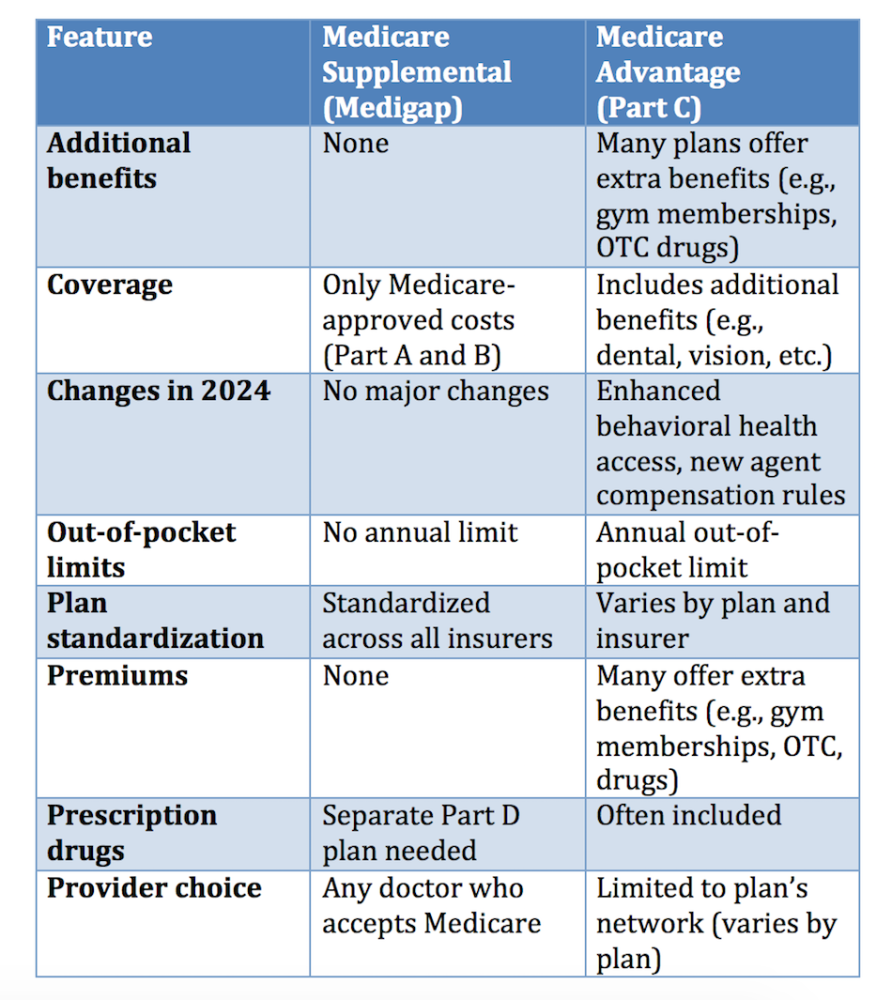
    Medicare Advantage plans are an alternative to Original Medicare, provided by private insurance companies approved by Medicare. These plans often include additional benefits not covered by Original Medicare, such as vision, hearing, dental, and wellness programs.

    Highlights for 2024 include:

    • Enhanced benefits—Many plans offer additional benefits, including transportation to medical appointments, over-the-counter drugs, and fitness programs.
    • Out-of-pocket limits—Medicare Advantage plans have an annual out-of-pocket limit for Part A and Part B services, providing financial protection.
    • Integrated coverage—Plans often include prescription drug coverage (Part D).

    In 2024 consumers will have more access to behavioral health services as a result of network adequacy standards for various behavioral health providers. Plans must now issue midyear notifications to enrollees, detailing any unused supplemental benefits in order to ensure that beneficiaries are aware of all available services.

    New guardrails are now in place to prevent anticompetitive steering by setting fixed compensation amounts for agents and brokers. There’s also a new requirement for annual health equity analysis of utilization management policies to ensure fair access for underserved populations.

    Medigap vs. Part C Comparison Chart

    Sources:

    Further Thoughts

    Both Medicare Supplemental Insurance and Medicare Advantage have their pros and cons, and the best choice depends on individual healthcare needs, preferences, and financial situation. For 2024, Medicare Advantage plans have been updated for increased access and equity while Medigap remains a stable option for those who prefer predictable costs and broader provider access.

    For more insights and innovative solutions in healthcare marketing, visit Innovation Direct Group.

    #customerexperience #healthcaremarketing #innovationdirectgroup

  • Rise of Social Media Advertising

    Rise of Social Media Advertising

    Social media has become an undeniable force in our daily lives, and, for businesses, it’s a powerful marketing channel. Advertising on social media platforms like Facebook, Instagram, LinkedIn, and TikTok enables companies to reach a vast audience with laser-focused precision. So what are the latest trends in social media advertising spend, and how does it benefit both companies and consumers?

    Increased Social Ad Spending

    Total spend on social media advertising is projected to reach $76.4 billion in 2024, with an annual growth rate of 3.62%, and is expected to reach $88.1 billion by 2028 (source: Sprout Social). This indicates a continued strong belief in the value of social media advertising for businesses.

    Mobile Reigns Supreme

    Mobile is king when it comes to social media ad consumption. Insider Intelligence reports that the average U.S. social media buyer is projected to spend $153.05 on advertising on social networks in 2024 and beyond. By 2028 a projected $255.8 billion of total social media ad spend will be generated through mobile devices (source: Statista). This emphasizes the importance of crafting mobile-friendly social media ad campaigns.

    Engagement Through Video

    Social media video continues to be a dominant force. Marketers are taking note, with 87% reporting that video marketing has directly increased sales (source: Sprout Social). Short-form video appears to be particularly effective, with videos between 30-60 seconds seeing the most success when it comes to return on investment (ROI) (source: Wistia).

    Value for Businesses

    Social media advertising offers a multitude of benefits for businesses.

    • Targeted reach—Unlike traditional advertising, social media ads allow businesses to target specific demographics, interests, and behaviors. This ensures that the ad reaches the most relevant audience, maximizing its effectiveness.
    • Increased brand awareness—Social media ads can significantly boost brand awareness, especially among new audiences.
    • Enhanced engagement—Social media platforms provide an avenue for two-way communication between brands and consumers. This fosters brand loyalty and allows businesses to build stronger customer relationships.
    • Measurable results—Social media advertising platforms offer detailed analytics that allow businesses to track the performance of their campaigns and measure ROI. This valuable data helps businesses refine their strategies and optimize their ad spend.

    Value for Consumers

    While social media advertising benefits businesses greatly, it can also hold value for consumers.

    • Discovery of new products and services—Social media ads can introduce consumers to new products and services that may interest to them.
    • Personalized recommendations—Ad platforms can tailor ad experiences to individual users based on their browsing habits and interests. This can lead to the discovery of relevant products or services that consumers might genuinely enjoy.
    • Exclusive offers and promotions—Businesses often use social media ads to promote exclusive discounts and deals, allowing consumers to save money on desired products.

    Sources:

    Further Thoughts

    With social media usage and ad spend on the rise, the future of social media advertising looks bright. Businesses can expect continued advancements in targeting capabilities, ad formats (especially video), and measurement tools. As the social media landscape evolves, so, too, will social media advertising, offering even greater value to both businesses and consumers.

    For more insights and innovative solutions in marketing and advertising, visit Innovation Direct Group.

    #marketing #advertising #innovationdirectgroupReport this article

  • Telephone Consumer Protection Act: Overview and Milestones

    Telephone Consumer Protection Act: Overview and Milestones

    Enacted in 1991 to address growing concerns over telemarketing practices, the Telephone Consumer Protection Act (TCPA) is a pivotal federal statute. TCPA regulates the use of automated dialing systems, prerecorded voice messages, SMS text messages, and fax machines. Over the years, significant court decisions have shaped the interpretation and enforcement of TCPA.

    Key Provisions of TCPA

    TCPA primarily regulates:

    • Autodialed calls—Restrictions on calls made using an automatic telephone dialing system (ATDS) to cell phones and certain landlines without prior express consent
    • Prerecorded messages—Prohibition of prerecorded voice messages to residential lines without prior express consent
    • Do-Not-Call (DNC) registry—Establishment of a national DNC registry, allowing consumers to opt-out of receiving telemarketing calls
    • Text messages—Extension of the same restrictions applicable to voice calls to SMS text messages

    Significant Regulatory Decisions and Interpretations

    1990s

    An increasing volume of unsolicited calls signaling the rise of telemarketing prompted the U.S. Congress to address consumer privacy and reduce nuisance calls. TCPA was born on December 20, 1991 when the Congress amended Title II of the Communications Act of 1934, adding Section 227 (47 U.S.C. Section 227).

    Consumers welcomed the legislation as a necessary step to protect their privacy. Telemarketers, however, saw it as a significant regulatory burden that would limit their outreach efforts.

    On September 17, 1992 the Federal Communications Commission (FCC), an independent U.S. government agency that regulates interstate and international communications, adopted the 1992 Implementing Order. This order clarified that autodialers don’t include artificial or prerecorded voice transmissions and also addressed consent related to phone numbers.

    The FCC’s goal was to provide clear guidelines on what constitutes an autodialer and to clarify consent requirements. Telemarketers adjusted their strategies to comply with the new definitions, and consumers appreciated clarification of their rights.

    2000s

    Telemarketers’ increasing use of predictive dialers led to pressure to apply regulatory oversight in order to prevent abuse and protect consumers. On July 3, 2003 FCC’s 2003 Report and Order subjected predictive dialers to TCPA, emphasizing their capacity to dial numbers without human intervention.

    As a result, telemarketers faced increased compliance costs and operational adjustments. Consumers saw it as a victory for privacy and reduced unwanted calls.

    To address ambiguities regarding consent in debt collection calls and ensure fair practices, on January 4, 2008 the FCC adopted the first 2008 Declaratory Ruling. This ruling confirmed that numbers given in debt transactions could be called using automated technologies and affirmed predictive dialers’ inclusion under TCPA.

    Consequently, debt collectors had to ensure that they obtained proper consent while consumers gained clarity on when it was permissible for them to be contacted.

    To delineate the scope of judicial review over FCC decisions and reinforce regulatory authority, on November 21, 2008 Leckler v. CashCall mentioned the Hobbs Act in TCPA jurisprudence for the first time. This impacted court jurisdiction over FCC rulings.

    Legal practitioners closely monitored implications for future TCPA litigation, with consumers and telemarketers awaiting further clarity.

    2010s

    To provide a consistent legal venue for TCPA claims and streamline the litigation process, on January 18, 2012 the U.S. Supreme Court announced its decision in Mims v. Arrow Financial Services, LLC. It held that federal and state courts have concurrent jurisdiction over private actions brought under the TCPA. This ruling confirmed that individuals can file TCPA lawsuits in both federal and state courts, broadening the avenues for redress available to consumers.

    This decision led to a surge in TCPA lawsuits as consumers found it easier to pursue claims. Telemarketers faced a heightened risk of litigation and increased legal scrutiny.

    On February 15, 2012 FCC’s 2012 Report and Order mandated express written consent for telemarketing calls to cell phones and removed the established business relationship exemption. The goal was to tighten consent requirements and eliminate loopholes that allowed unsolicited calls.

    Consumers welcomed stronger consent rules while telemarketers had to overhaul their consent practices and documentation.

    To protect current subscribers from calls intended for previous owners of the phone numbers, on May 11, 2012 the Seventh Circuit’s Soppet v. Enhanced Recovery defined the “called party” for consent purposes as the current subscriber, imposing strict liability on callers.

    Telemarketers faced increased risks of inadvertently violating TCPA while consumers benefited from greater protections against misdirected calls.

    To address evolving telemarketing technologies and clarify regulatory definitions, on July 10, 2015 FCC’s Omnibus TCPA Order affirmed predictive dialers as ATDS and introduced stringent revocation and consent rules, which were later partly overturned by the D.C. Circuit.

    Consumers appreciated the broader protections, but telemarketers argued that the definitions were too expansive and burdensome.

    The proliferation of robocalls and consumer complaints prompted legislative action to curb abusive practices. On December 31, 2019 Congress passed the Pallone-Thune Telephone Robocall Abuse Criminal Enforcement and Deterrence Act, addressing robocalls.

    Consumers hailed the act as a major step towards reducing robocalls. However, telemarketers, especially those relying heavily on automated calls, faced new regulatory challenges.

    In 2016 the Supreme Court ruled in Campbell-Ewald Co. v. Gomez that an unaccepted settlement offer or offer of judgment doesn’t moot a plaintiff’s TCPA claim. This decision affirmed that defendants can’t avoid TCPA class action lawsuits by offering to settle with individual plaintiffs.

    In another legal decision in 2016, although not in a TCPA-specific case, Spokeo, Inc. v. Robins influenced TCPA litigation by addressing the issue of standing. The Supreme Court held that plaintiffs must demonstrate concrete harm even in cases involving statutory violations so as to satisfy the injury-in-fact requirement of Article III standing.

    In 2018 in ACA International v. FCC, the D.C. Circuit Court of Appeals struck down parts of a 2015 FCC order that broadly defined autodialers and imposed strict liability for calling reassigned numbers. The court invalidated the FCC’s expansive interpretation of what constitutes an ATDS and the strict liability approach for calls made to reassigned numbers without the caller’s knowledge.

    2020s

    In 2020 in Barr v. American Association of Political Consultants, the Supreme Court ruled that the government-debt exception to the TCPA’s robocall ban violated the First Amendment. However, instead of invalidating the entire robocall ban, the Court severed the exception from the statute, leaving the rest of the TCPA intact.

    To provide clarity and limit the scope of what constitutes an ATDS under the TCPA, on April 1, 2021 the Supreme Court’s Facebook ruling narrowed the TCPA’s ATDS definition to devices with the capacity to store or produce numbers to be dialed using an ATDS. This ruling significantly limited the scope of devices considered autodialers under TCPA.

    Telemarketers found relief in the narrower definition, potentially reducing their compliance burden. On the other hand, consumers and consumer advocacy groups expressed concerns over potential loopholes that could allow more unsolicited calls.

    In December 2023, the FCC made significant amendments to TCPA regulations including requirements for businesses to obtain a consumer’s prior express written consent before making calls or sending texts using an ATDS, prerecorded message, or artificial voice. The FCC also extended DNC provisions to cover text messages, requiring prior express invitation or permission before sending marketing texts to numbers listed on the DNC registry.

    In 2024, in United States v. Stratics Networks, Inc., a case with broad implications, the U.S. District Court for the Southern District of California dismissed claims against Stratics Networks, a provider of ringless voicemail and VoIP services. The court ruled that Stratics was protected under Section 230 of the Communications Decency Act, which grants immunity to providers of interactive computer services from civil liability based on third-party content. This ruling underscored TCPA’s limitations in holding platform providers liable for users’ misuse of technology.

    Sources:

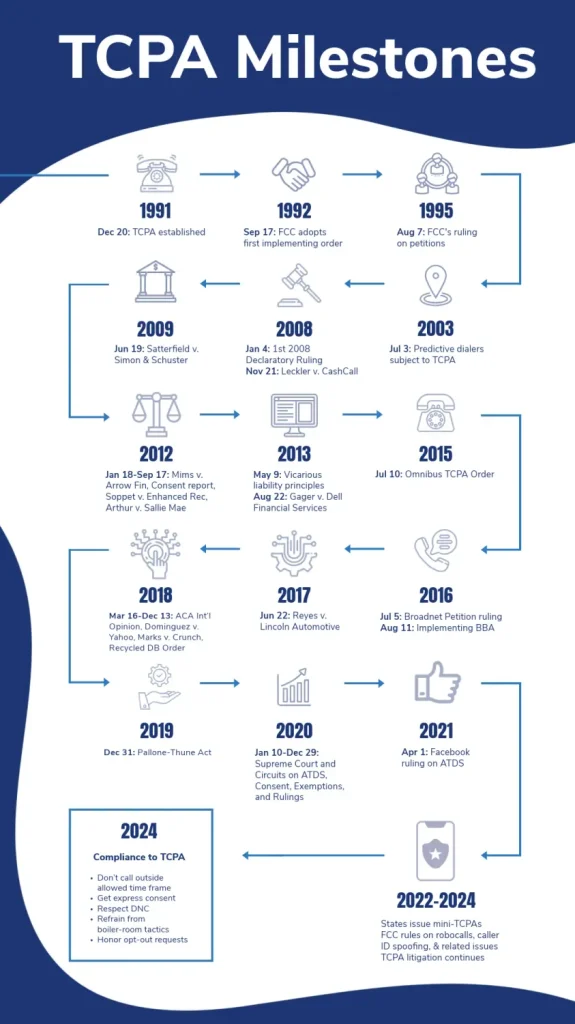
    TCPA Milestones (credit: Innovation Direct Group)

    State-Level Mini-TCPA Laws

    Several states have enacted their own telemarketing laws, often referred to as “mini-TCPA” statutes. These laws typically impose stricter requirements and penalties than the federal TCPA.

    California

    California has enacted its own privacy and telemarketing laws that include provisions similar to TCPA. The California Invasion of Privacy Act (CIPA) is often used in conjunction with TCPA claims. CIPA addresses wiretapping and eavesdropping, extending protections to various forms of electronic communications.

    Florida

    The 2023 amendment to the Florida Telephone Solicitation Act clarified ambiguities and aligned its definition of an ATDS more closely with the federal TCPA. It also introduced new restrictions on text message solicitations.

    Georgia

    Proposed amendments to Georgia’s telemarketing laws aim to tighten restrictions on autodialed calls and enhance penalties. The bill includes provisions for civil litigants to recover at least $1,000 per violation and facilitates class actions.

    Maryland

    The “Stop the Spam Calls Act of 2023” prohibited certain caller ID-blocking technologies and set stricter rules for solicitation calls, including a cap on the number of calls per day.

    New York

    Amendments to New York’s telemarketing laws increased penalties for violations and required telemarketers to offer consumers the option to be added to the company’s internal DNC list at the start of a call.

    Oklahoma

    The Oklahoma Telephone Solicitation Act (OTSA) of 2022 includes provisions similar to the TCPA but with broader definitions. The OTSA permits civil litigants to recover at least $500 per violation and imposes additional restrictions on autodialed calls.

    Texas

    The Texas Business and Commerce Code requires telemarketers to hold a registration certificate with the Texas Secretary of State and imposes penalties of up to $5,000 per unregistered call.

    Virginia

    The Virginia Telephone Privacy Protection Act mandates that telemarketers identify themselves and the entity on whose behalf the call is made at the beginning of the call. Violations can result in statutory damages of up to $5,000 for subsequent offenses.

    Washington

    Washington updated its telemarketing laws to broaden the definition of “telephone solicitation” and impose new requirements on telemarketers, including ending calls within 10 seconds if the called party indicates they want to end the call.

    Sources:

    Further Thoughts

    TCPA litigation continues to evolve, with new technologies and marketing practices challenging existing regulations. Session replay technology, used to validate TCPA consent, has faced legal challenges related to privacy concerns.

    Courts have varied in their interpretations, leading to inconsistent rulings across different jurisdictions. This area of law is expected to continue evolving as courts and regulators address the complexities of applying old statutes to new technologies.

    As states continue to enact and update mini-TCPA laws, the regulatory landscape for telemarketing practices will become increasingly complex, necessitating careful navigation by businesses so as to avoid costly litigation. TCPA’s evolution reflects a balancing act between consumer privacy and telemarketers’ operational needs.

    For more insights and innovative solutions in digital marketing, visit Innovation Direct Group.

    #tcpa #telemarketing #innovationdirectgroup